Breast density (also known as ‘mammographic density’) is a strong predictor of whether a woman will develop breast cancer in her lifetime. Despite this, researchers and medical professionals are still unsure of why this is the case, and many women have never heard the phrase before!
That’s why we have invited Cheryl Cruwys of Breast Density Matters to help us learn what exactly breast density is and why it’s important to find out where you fall on this scale.
What is Dense Breast Tissue?
Dense breasts are normal. All breasts contain glands, fibrous tissue, and fat. Dense tissue is made of glands and fibrous tissue. Dense breasts have relatively more glandular/fibrous tissue than fatty breasts.
However, having dense breasts both increases the likelihood of developing cancer and of having cancer being missed by mammography. Mammograms are not as effective in detecting cancerous tumours within dense breast tissue.
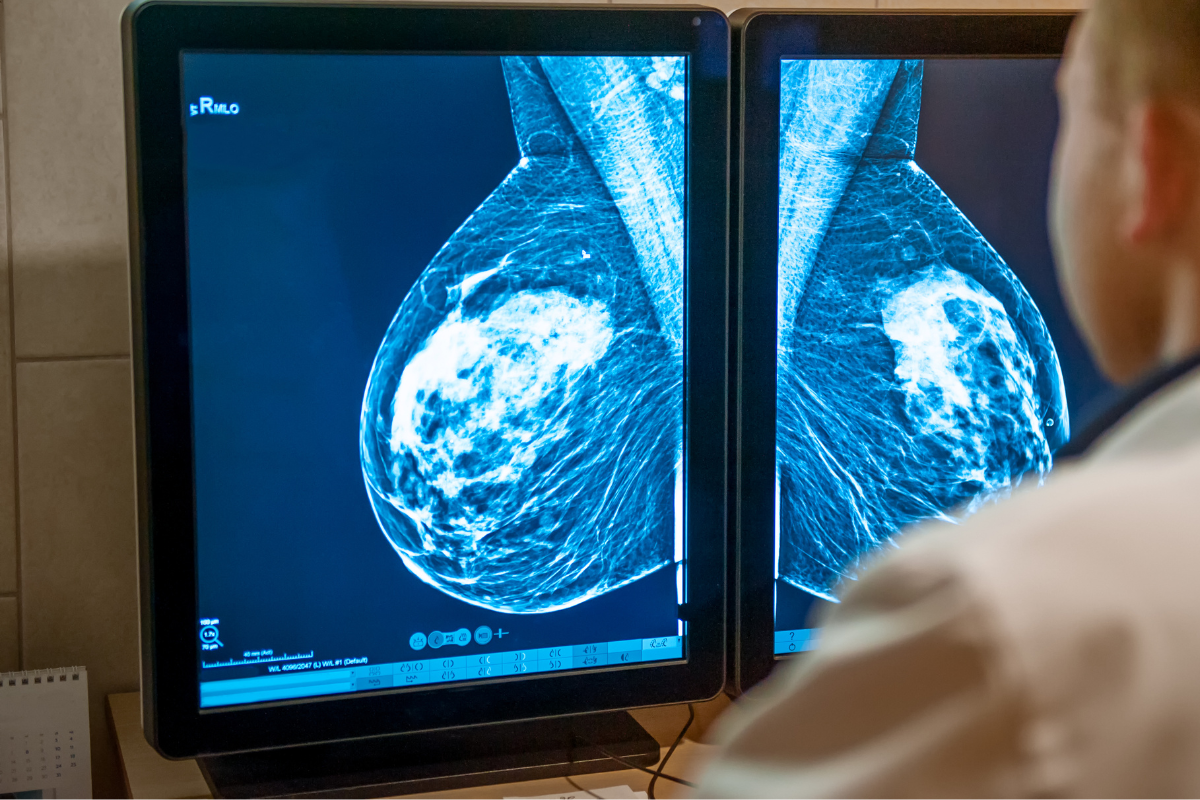
As seen in Fig.1, dense breast tissue appears white as does a cancerous tumour; it is like looking for a ball of cotton in a snowstorm; the denser the tissue, the whiter the mammogram. This matters because as density increases, the ability of a mammogram to show cancer decreases.
Currently, as per the UK national screening guidelines, women with dense breasts are screened solely with mammograms. In some other countries such as France and Austria, a woman with dense breasts is offered further screening (e.g. ultrasound).
Breast density is an important piece of information about a woman’s breast health. Few women are aware of their own breast density or its associated risks. In the UK, there is an increase in need for density education for both health professionals and for patients.

Figure 1
Currently, awareness about the need for education on the topic is raised by Breast Density Matters UK who recommends medically-sourced DenseBreast-info as an educational resource. Equipped with their density composition, women can discuss appropriate screening with health professionals and make informed decisions on their breast health.
Dense Breast Facts

Figure 2 – (C) Heterogeneously dense or (D) Extremely dense are considered “dense breasts.”
- Breast density is determined through a woman’s mammogram and described as one of four categories: (A) Fatty; (B) Scattered fibroglandular density; (C) Heterogeneously dense; or (D) Extremely dense. (Fig.2).
- Dense breasts are normal. 40% of women age 40 and over have dense breasts.
- Although normal, dense breast tissue is a risk factor for developing breast cancer and the denser the breast, the greater the risk.
- Mammography remains the standard screening test for breast cancer and is proven to reduce deaths due to breast cancer. However, in dense breasts, cancers can be hidden on mammography and may go undetected until they are larger and more likely to have spread.
- Other screening tests, such as ultrasound or MRI, when added to mammography, substantially increase the detection of early stage breast cancer in women with dense breasts.
(c) 2015-2020, DenseBreast-info.org
How is Prevent Breast Cancer helping?
In addition to working with Breast Density Matters to raise awareness, Prevent Breast Cancer’s funded scientists are working hard to unlock the mysteries of this significant risk factor. Our current research projects on this topic include finding out what dense breast tissue is made of and which genetic changes occur within dense breasts that can lead to cancer developing.
The hope is that these projects could even lead to new preventative drugs in future that can lower breast density levels and therefore breast cancer risk. The charity would like to say a huge thanks to Tim Bacon Foundation for supporting our breast density research projects.

About Prevent Breast Cancer
Prevent Breast Cancer is the only UK charity entirely dedicated to the prediction and prevention of breast cancer – we’re committed to freeing the world from the disease altogether. Unlike many cancer charities, we’re focused on preventing, rather than curing. Promoting early diagnosis, screening and lifestyle changes, we believe we can stop the problem before it starts. And being situated at the only breast cancer prevention centre in the UK, we’re right at the front-line in the fight against the disease. Join us today and help us create a future free from breast cancer. If you have any questions or concerns, email us today.